Every medical, biology, and dietetics student has learned the classical endocrine dichotomy: insulin lowers blood glucose and stores energy, while glucagon, secreted by pancreatic alpha cells, raises blood glucose and mobilizes glycogen during fasting.
For decades, pharmacological strategies sought to *block* glucagon receptors to manage type 2 diabetes.
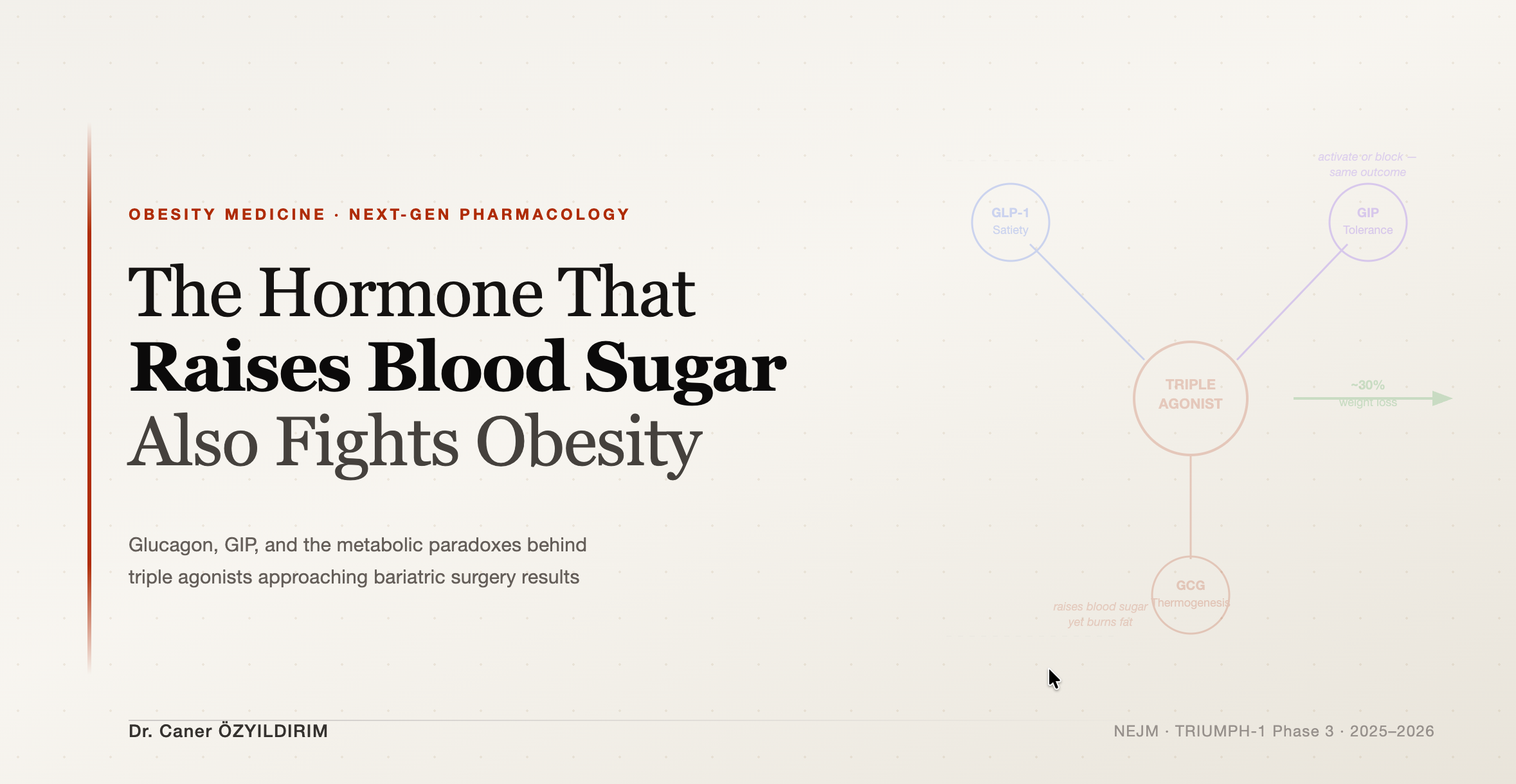
Why, then, does the most groundbreaking new class of metabolic drugs—including dual agonists like survodutide and triple agonists like retatrutide (which achieved a staggering 24.2% mean weight loss in Phase 2 clinical trials)—deliberately include a glucagon receptor agonist?
The resolution to this apparent paradox lies in the profound difference between isolated glycemic output and systemic metabolic expenditure.
1. The Overlooked Metabolic Engine of Glucagon
Glucagon receptors are abundantly expressed throughout hepatocytes. Beyond glycogenolysis, hepatic glucagon receptor (GCGR) signaling acts as a premier activator of energy expenditure:
- Potent Hepatic Beta-Oxidation: Glucagon stimulates the enzymatic machinery that drives intrahepatic lipid oxidation, purging triglyceride droplets from steatotic hepatocytes.
- Elevating Resting Energy Expenditure: Glucagon increases whole-body basal metabolic rate through sympathetic nervous system stimulation, hepatic futile substrate cycling, and non-shivering thermogenesis.
- Appetite Suppression via Hepatosensory Signaling: Hepatic glucagon activation signals via the hepatic branch of the vagus nerve directly to the solitary tract in the brainstem, inducing early meal termination.
2. The Great Problem: Glycemic Penalty
If native glucagon increases metabolic expenditure and melts liver fat, why couldn't we simply inject glucagon alone to treat obesity?
Because administered in isolation, glucagon triggers immediate hepatic glycogen breakdown and gluconeogenesis, producing significant hyperglycemia. In an individual with insulin resistance or diabetes, pure glucagon administration is dangerous.
3. The Molecular Masterstroke: Balanced Multi-Agonism
The brilliance of contemporary peptide engineering lies in molecular synergy.
When glucagon receptor agonism is chemically paired on the same molecular backbone with GLP-1 and GIP (as achieved in multi-incretin unimolecular peptides):
- The GLP-1 & GIP component potently triggers glucose-dependent insulin secretion from beta cells and silences abnormal postprandial glucose surges.
- This glycemic buffering completely neutralizes the hyperglycemic risk of glucagon.
- Meanwhile, the glucagon component works uninhibited in the liver and adipose tissue, driving unprecedented rates of fatty acid oxidation, burning visceral depots, and maintaining resting metabolic rate despite rapid caloric deficits.