One of the most consequential yet underdeveloped questions in modern endocrinology is: What is the exit plan?
Patients frequently initiate incretin therapies with the tacit assumption that medications are a temporary scaffold: they will achieve their goal weight, cease injections, and effortlessly sustain their new body composition through willpower.
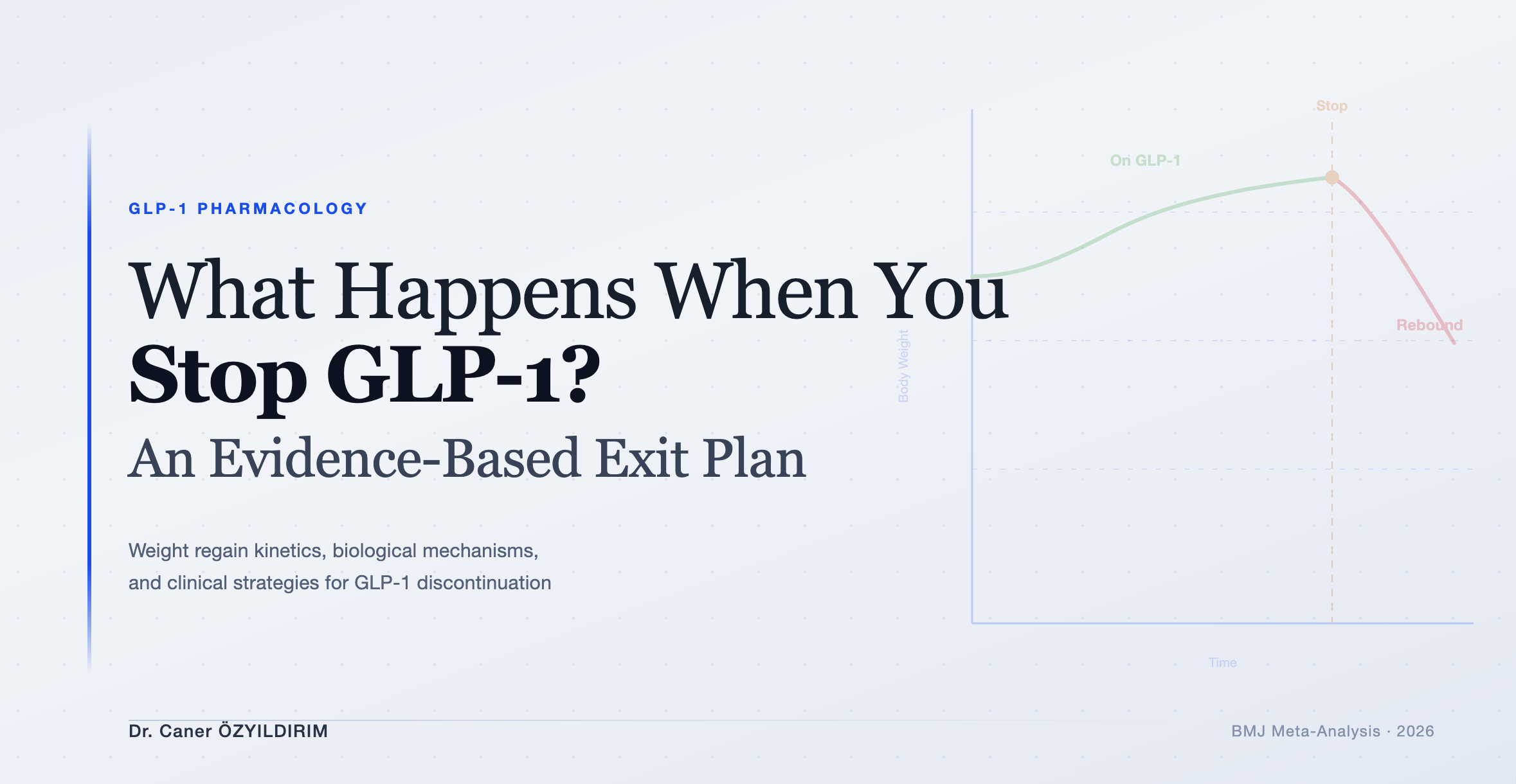
The rigorous clinical data delivers a sobering reality check. In the STEP-1 trial extension, participants who discontinued semaglutide after 68 weeks regained two-thirds of their lost weight within the subsequent 12 months.
Understanding the neuroendocrine rebound that accompanies drug cessation is imperative for designing a clinically viable exit strategy.
1. The Physiological Recoil: Why the Body Fights to Regain
Discontinuing a GLP-1 receptor agonist does not merely return the patient to baseline; it plunges them into a neuroendocrine state of heightened biological vulnerability:
- Abrupt Recovery of Gastric Motility: Satiety-inducing delayed gastric emptying resolves within days. Meals clear the stomach rapidly, stripping the patient of mechanical fullness.
- The "Food Noise" Rebound: Pharmacological suppression of hypothalamic and mesolimbic dopamine circuits vanishes, causing hunger signals and hedonic cravings to surge with intense rebound force.
- Suppressed Resting Metabolic Rate (Adaptive Thermogenesis): A body that has lost 15% to 20% of its mass expends substantially fewer calories. If muscle mass was lost during the deficit, this deficit is even deeper.
- Hormonal Starvation Architecture: Circulating leptin remains severely depressed while circulating ghrelin is elevated, tricking the brain into believing the individual is undergoing prolonged environmental famine.
2. The Danger of "Cold-Turkey" Cessation
Abruptly halting maximum-dose GLP-1 therapy is the most frequent trigger of rapid relapse. Patients suddenly experience overwhelming appetite surges without having established the behavioral, nutritional, or resistance training foundation required to counteract their lowered metabolic expenditure.
3. The 4-Pillar Clinical De-escalation Protocol
For patients who genuinely desire to taper off incretin therapies, clinicians must enforce a structured de-escalation framework:
- 1. Prioritize Resistance Training & Lean Mass Prior to Taper: Never begin tapering until the patient has demonstrated consistent progressive resistance training and halted skeletal muscle loss. Preserving muscle mass is the single strongest buffer against post-cessation metabolic drop.
- 2. Stepwise Dose Titration Downward: Taper the weekly dosage gradually over 3 to 6 months (e.g., 2.4 mg → 1.7 mg → 1.0 mg → 0.5 mg) rather than abrupt cessation.
- 3. High Protein & Viscous Fiber Anchoring: Enforce a dietary framework delivering 1.6 to 2.0 g/kg ideal body weight of protein alongside 35+ grams of viscous soluble fiber to maximize endogenous L-cell stimulation and mechanical satiety.
- 4. Continuous Biometric Surveillance: Establish weekly weight check-ins and body composition monitoring. If total body weight rebounds by more than 3% to 5%, immediate clinical reassessment is warranted.