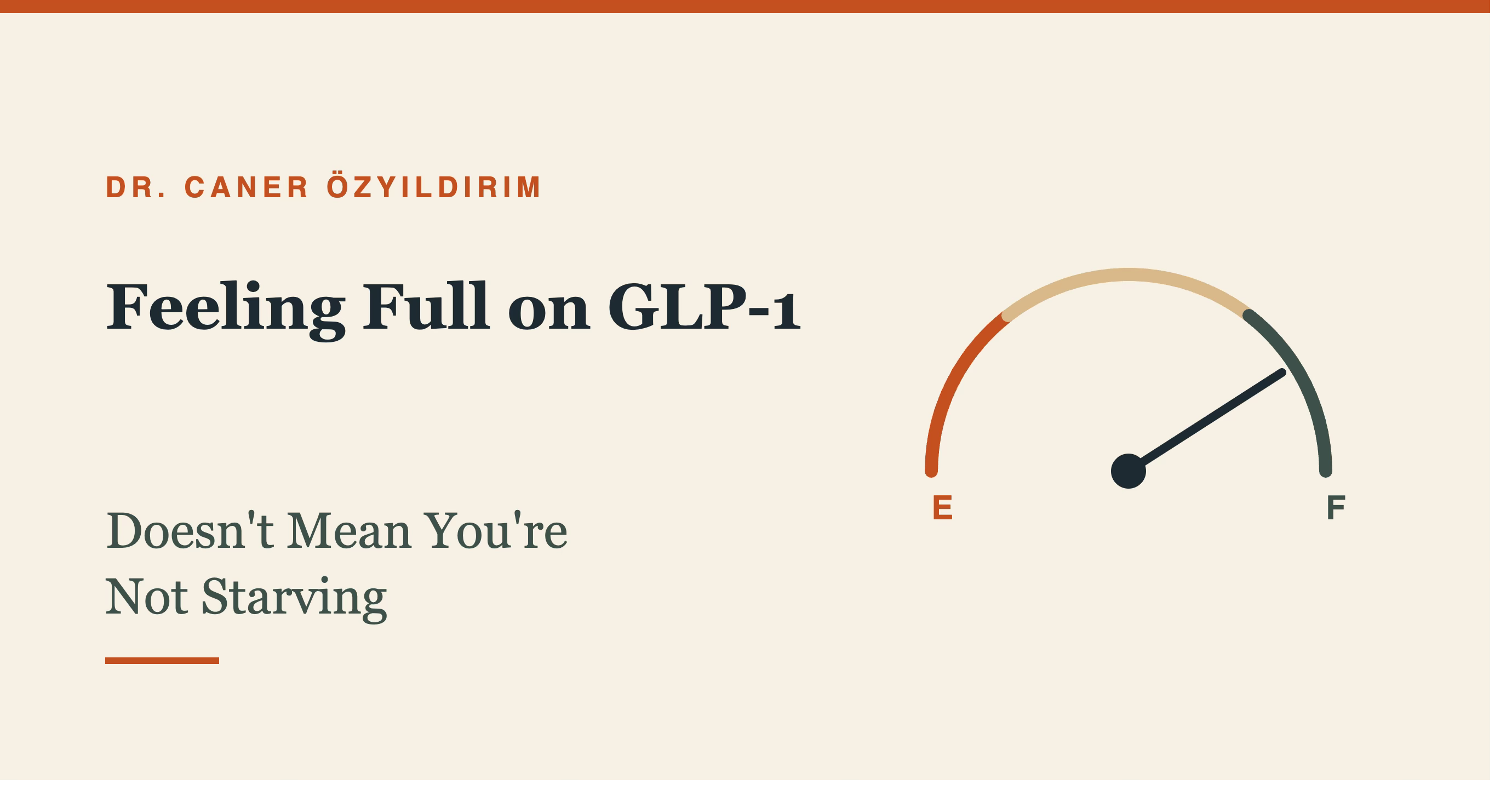
On social media and in clinical exam rooms, new GLP-1 patients frequently share a common boast: *"I haven't felt hungry in three days! I had half an apple and an iced latte today, and I couldn't take another bite."*
In a culture conditioned by chronic dieting, extinguishing appetite is often celebrated as the ultimate victory.
However, from the perspective of human biochemistry and clinical nutrition, this state carries a grave physiological hazard: Feeling completely full in your stomach does not alter the objective biochemical reality that your cells may be experiencing critical nutrient deprivation.
1. The Peril of the Sub-800 kcal Window
When starting or titrating GLP-1 receptor agonists, intense delayed gastric emptying and central satiety can collapse voluntary caloric intake below 600 to 800 kcal per day.
While an adult body carrying excess adiposity has thousands of stored calories in the form of triglycerides, fat depots store zero vitamins, minerals, or essential amino acids.
When dietary intake collapses indiscriminately:
- Hair Follicle Telogen Effluvium: Rapid onset of diffuse hair shedding (telogen effluvium) within 2 to 4 months due to acute protein and zinc deprivation.
- Electrolyte & Bone Mineral Density Depletion: Inadequate dietary calcium, magnesium, and vitamin D accelerates bone turnover, increasing osteopenic risk.
- Immune Suppression: Reduced zinc, selenium, and essential amino acid availability compromises lymphocyte proliferation and humoral immune defense.
- Severe Fatigue & Cognitive Fog: Deficiencies in B-complex vitamins (especially B12 and folate) and iron induce microcytic or macrocytic anemia and impair mitochondrial ATP production.
2. Navigating Pharmacological Hypophagia: The Nutrition Prescription
When appetite is suppressed to minimum levels, every single bite must be metabolically prioritized:
- Eliminate "Empty Fillers": In a state where total volume is constrained to small portions, refined crackers, sugary sips, and processed snacks displace life-essential nutrients.
- Protein-First Architecture: Ensure that the first foods consumed in any meal are high-biological-value protein sources delivering essential amino acids.
- Micronutrient Density: Emphasize leafy greens, eggs, wild fish, organ meats, or tailored pharmaceutical-grade micronutrient supplementation.
- Hydration & Electrolytes: Because insulin levels drop and oral intake declines, renal sodium and fluid excretion accelerate. Patients must actively consume fluids and electrolytes even in the absence of thirst cues.